
Europa, a moon of Jupiter, is about the size of our moon but has more liquid water on it than we have on Earth. This water is encased in a relatively thin ice shell that displays a wide variety of interesting geological features. Europa’s water, energy, and chemistry make it the most likely home for extraterrestrial life in our solar system.
NASA recently tasked a team of scientists selected from the planetary science community to work with engineers at the Jet Propulsion Laboratory and Johns Hopkins’ Applied Physics Laboratory to design a mission to Europa that can meet a strict cost cap while still conducting excellent, valuable scientific observations. The result of this thorough study was the Europa Clipper mission concept. For less than half the cost of past mission concepts, the Clipper would investigate Europa’s chemistry, ocean, and energy in order to determine whether this icy ocean moon is habitable.
Planetary scientists have to be very patient. Spacecraft missions take decades to plan, build, and arrive at outer solar system destinations. It also means that we have to be persistent and motivated in order to see these missions come to fruition. We need public support, and that means sharing all of the exciting discoveries that planetary scientists are making every day.
We created Destination: Europa with a dual purpose – to inform and excite the public about Europa and the Clipper mission and to give planetary scientists access and resources to promote a “new start” for a Europa mission. We hope that this site will inspire scientists and enthusiasts, citizens and lawmakers, to support the Europa Clipper mission.
–The Destination: Europa steering committee

Alyssa Rhoden discovered her passion for planets while an undergraduate at The University of Arizona. Her early experiences studying Europa motivated her to pursue a PhD in Earth and Planetary Science at UC – Berkeley. She is now a NASA Postdoctoral Program fellow, working at NASA Goddard Space Flight Center, where she studies the dynamics and geophysics of icy satellites, dwarf planets, and asteroids.
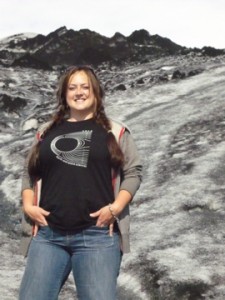
Britney Schmidt is interested in how to form and detect habitable worlds, particularly those that are icy. She began her career as an undergraduate doing research at theUniversity of Arizona Lunar and Planetary Lab, studying comets, meteorites, Triton, and of course, Europa. She received her PhD from UCLA in Geophysics and Planetary Physics where she studied the evolution of large icy bodies and asteroids. She is now a research scientist at the Institute for Geophysics at the Univ. of Texas, Austin, where she works in Antarctic field analog studies to understand how ice-water interactions on Earth give us a window into processes on Europa.

Cynthia Phillips is a senior research scientist at the SETI Institute. While she’s been known to dabble in research on various icy moons, and even a bit of Mars work, her first love will always be Europa. Cynthia helped plan observations of Europa (and Io) as an associate of the Galileo Imaging Team while a graduate student at the University of Arizona, in the planetary science department, and has been eagerly anticipating the next Europa mission ever since. She did her undergraduate work in astronomy and astrophysics, and physics, at Harvard University.

David Choi has had a lifelong fascination with astronomy and meteorology, and combined those interests starting as an undergraduate at Cornell University. There, he started research into Jupiter’s dynamic atmosphere, a topic he continued researching while earning his PhD in planetary science from the University of Arizona. He is now a NASA Postdoctoral Program Fellow at Goddard Space Flight Center.
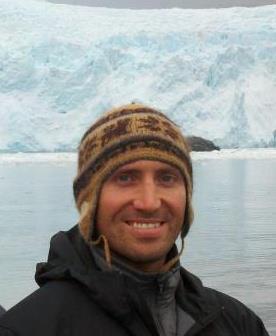
Otherworldly images of Europa’s fractured and pockmarked surface beamed back by NASA’s Galileo mission inspired Paul Hayne to switch majors as an undergraduate at Stanford University. After completing BS and MS degrees in geophysics, he traveled south to study planetary science at UCLA, where he earned his PhD with a dissertation on the polar ice caps of Mars and the Moon. Now a research scientist at the Jet Propulsion Laboratory, he uses remote sensing techniques to study the atmospheres, surfaces, and interiors of a wide range of planetary bodies, including Europa.
Destination: Europa is a labor of love. The views expressed on this website are not necessarily those of the organizations with which we affiliate.


